

The Beginning
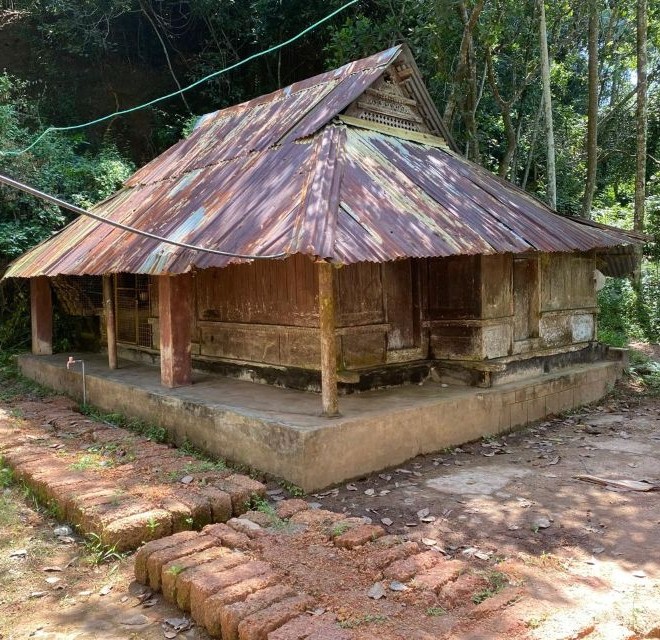
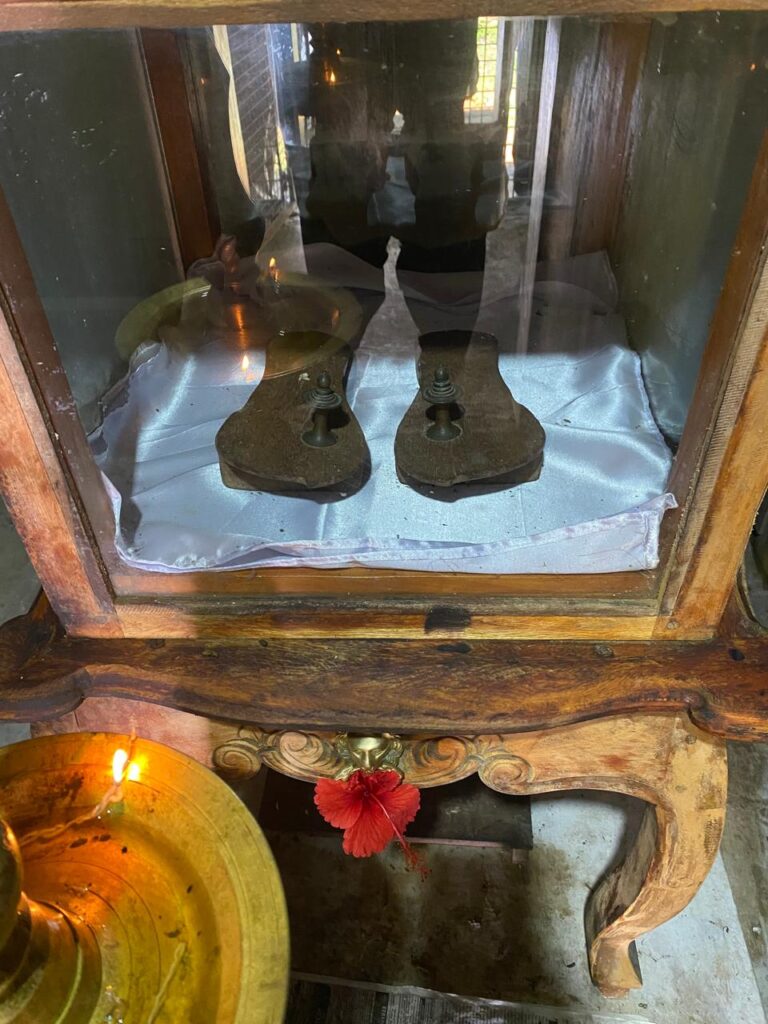
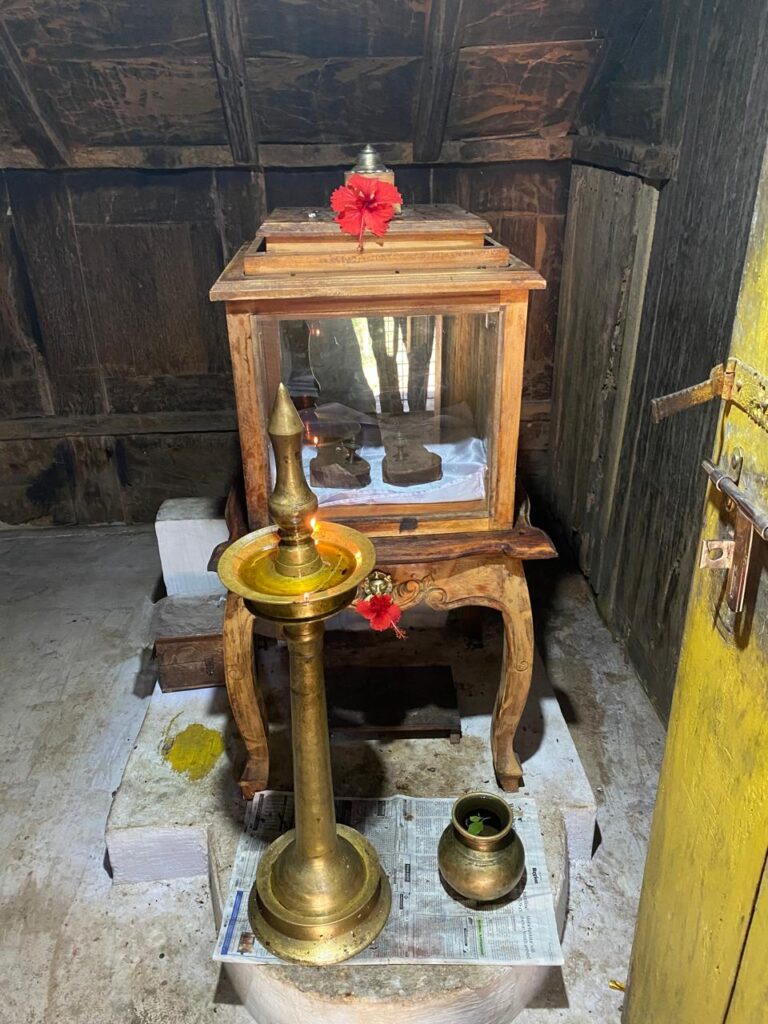
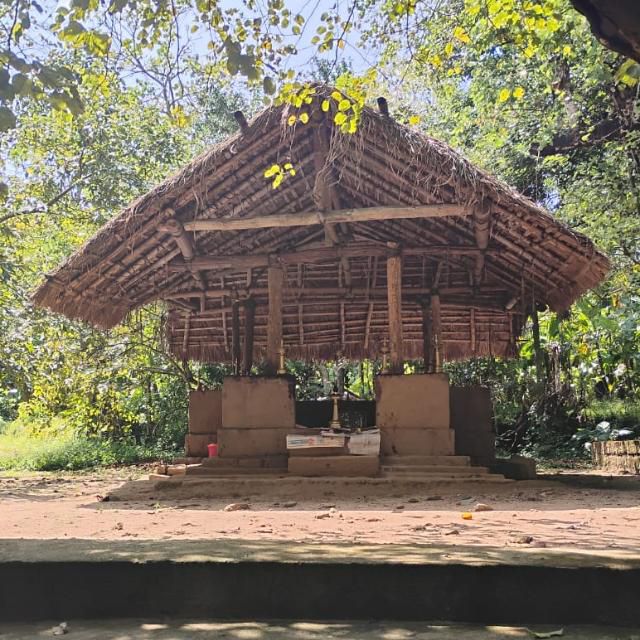
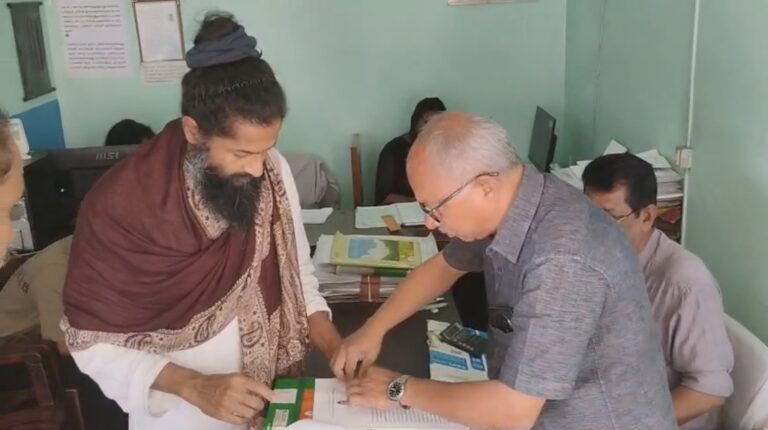
On November 25th, 2025, at exactly 11:41 a.m., the land for "Thasmai Valmiki Ashram" in Pulpalli, Wayanad was registered —a sacred land where Maharshi Valmiki performed 12,000 years of penance; Ma Sita resided during her pregnancy; Hanuman swami protected her; Lava and Kusha were born; the Ashwamedha horse was tied; and, finally, Ma Sita returned to the Earth.
What made this moment extraordinary was not just the act itself, but what was unfolding at the very same time elsewhere in the country.
At nearly the same hour, PM Narendra Modi was performing the sacred Dhwaja Arohan (flag hoisting) ceremony at the Ram Mandir in Ayodhya marking a significant spiritual milestone and the symbolic establishment of dharma.
We worship Lord Shri Rama, but how can we forget Ma Sita—who stood silently and selflessly, making great sacrifices throughout her life? She overcame difficulties and crises with her spiritual strength and cleared obstacles from Shri Rama’s path, allowing him to fulfil his duties. Yet, we often remember her only as Shri Rama’s wife. She performed all her duties with subtlety and never sought recognition, praise, or anything in return.
As our scriptures say:
“Yatra naryastu poojyante ramante tatra devatah” — where women are worshipped, divine grace resides.
If "Shri Rama" to be truly present in Ayodhya, we should honor and install "Ma Sita" also.
Two events, miles apart, yet aligned within the same moment in time.
And as if this alignment wasn’t rare enough, the day carried another anomaly—due to technical issues, land registrations across Kerala had largely come to a halt. Yet, this one went through.
A beginning that didn’t just happen, but felt granted.
The Consecration of land
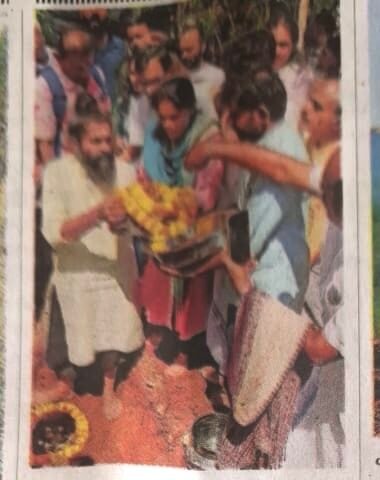
On February 8th at 6:00 a.m., the Bhoomi Pooja for the Thasmai Valmiki Ashram in Ashramkolli was performed — marking a beginning rooted in purification, permission, and dedication.
The morning began with the Divine Ganapati Homa and Chendamelam, under the blessings of Sree Narayana Guru, along with Guru Paramapara smarana. Led by Shri Sivan Shanthi (Former Melshanthi of Sivagiri Sree Narayana International Study Centre, Mumbai, and a graduate of Sivagiri Brahmavidyalayam) and Shri Pramod Shanthi. It was followed by a Vadyamela procession from the cave where Valmiki Maharishi is believed to have performed penance for 12,000 years to the ashram site.
Offerings were made to Sita Devi, Sri Rama, Lakshmana, and all deities, along with worship of Hanuman, with prayers for all activities to move forward on the path of dharma.
Permission was sought from the land and all living beings as per Vastu.
Trees were planted, followed by the foundation stone laying (Kallidal) at the land purchased by Thasmai Charitable Trust, in the presence of Thasmai Guruji, his disciples, devotees, and local residents united in the intention that the spiritual activities here may benefit the world..
The Beginning of Guru Bhavanam
Even though India has always been the land of sages, where many gurus have appeared and attain salvation through time, this moment was seen as a reminder—so that what was once lost through neglect or lack of recognition is not repeated again.
In Arsha Bharat, the sacred land of Gurus, can there be true prosperity if Gurus are not respected or are forgotten?
Guru Nindah leads to destruction. The effects of such karma may continue for seven generations.
In Ashramkolli, under the initiative of the Bengaluru-based Thasmai Charitable Trust, preparations for the new ashram and its facilities continued. The first structure of the project, “Guru Bhavanam,” began to take shape.
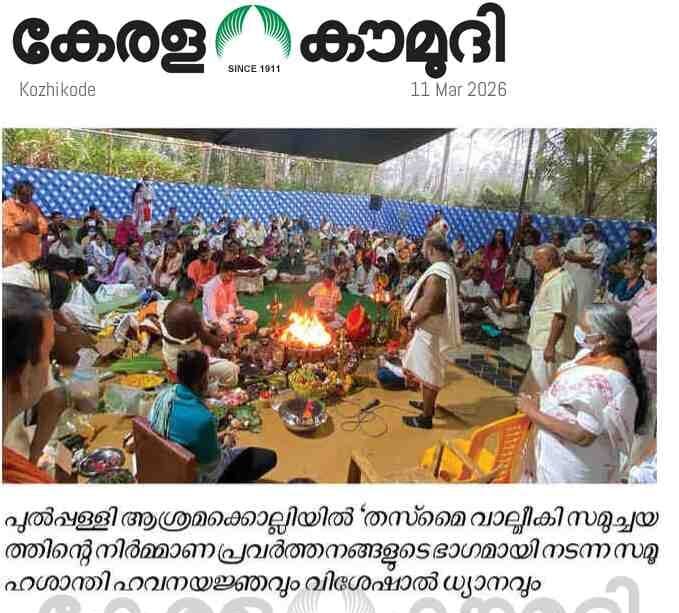
As part of this, a 12-hour community Shantihavana was conducted from 5:00 a.m. to 5:00 p.m. on March 8, 2026, on the sacred land purchased by the Trust for the construction of Thasmai Valmiki Ashram in Pulpally. The event marked what was seen as the beginning of Satya Yuga, dedicated to the welfare of the world.
More than 250 disciples participated in the homam, observing fasting and celibacy for at least a week before the ceremony. A special meditation was also held on March 7th and 8th.
The installation of the conch shell and the Prana Pratishtha were performed by Dr. Nishanth Thoppil under the guidance of Thasmai Guruji.



